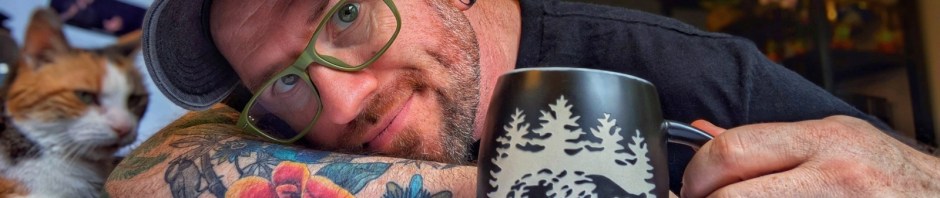

Hi! I’m Kevin Burgio, the Executive Director for the CT River Coastal Conservation District. I am a spatial ecologist, conservation scientist, and science communicator committed to making conservation science impactful and accessible. I am also a Subject Editor for Avian Conservation and Ecology, where I help ensure new research in avian ecology and conservation planning meets the highest scientific standards. On the side, I lead an informal parrot research group as a passion project.
My work bridges spatial ecology, climate resilience, and biodiversity conservation. My career spans academia, non-profit, federal, and consulting, and I have researched birds, mammals, parasites, and many other taxa. Over the past 15 years, I’ve contributed to more than 40 scientific publications and government reports. In my various roles, I have collaborated with federal, regional, state, local, and nonprofit partners to advance conservation strategies across multiple scales.
Science communication is a cornerstone of my work. I’ve shared my research and experiences in outlets like The Washington Post, The Conversation, and NPR, as well as through podcasts like The Story Collider. I believe conservation needs to be as dynamic, inclusive, and innovative as the challenges it faces.
 Kevin R. Burgio
Dear Dr. Burgio, I have historical information I’d like to send to you, but i do not have a correct mailing address. Please send an address so I can forward it back to you, Sincerely Charles Carter
LikeLike
Charles,
I am sorry I missed this! Can you email me at kevin.burgio@gmail.com?
LikeLike
I read your co-authored article in the American Scientist recently and, as a fellow Sigma Xi-er and a woman, the changes in research publication are happening very fast…and, for women, equality has always been an issue. I am impressed by the energy and commitment by younger scholars who are becoming entrepreneurs in their efforts to bring science publishing, evaluation and citation into the 21st century. AND the number of new products and innovations they are working to enact – from Authorea to Scite to ……
I am writing the article for the web-based Against the Grain website and I have my own professional interest in these key areas.
Here are my questions:
1, What are your thoughts on scientific publishing needs as open-access peer review, free publication, social media for self-dissemination, and altmetrics for measuring impact, non-traditional publishing platforms. rAre we ready for this?
2. It seems to me that we are seeing a whole new generation of scientists untethered from the ‘traditional’ publication system and willing to experiment and explore more ‘reasonable’ methods. How do you see this evolving to become more inclusive?
3. Any thoughts you’d want to share on Open Science today and where you see it going?
Years ago, I was interviewed by a WSJ stringer who had no background in this topic – and he misquoted me so seriously that I’ve promised myself NEVER to allow that to happen to anyone that I work with! So, I’d appreciate getting your thoughts via email! For the best of both of our sakes!
I would like to get your comments by Tuesday, July 2nd in order to meet my publication deadline.
As soon as the article is published I will see that you are copied on the URL. And, if I’m missing something important, please add additional comments. I don’t want to miss anything important here!
Thank you, in advance, for considering this! The readers of Against the Grain – publishers, librarians, writers, academics – will benefit from your participation.
My best regards,
Nancy K. Herther
University of Minnesota
LikeLike
I am sure I saw a pair of the parrots in Guilford Ct. drinking out of a puddle. It was about 15 years ago. There were two so I don’t think it was an escaped pet.
LikeLiked by 1 person
You very likely saw Monk Parakeets, a species originally from South America but started building up populations in coastal Connecticut and many other places in the world after so many pets were released or escaped. I did my undergraduate research on populations in West Haven and Stratford!
LikeLike
We’ve had a flock of 15 – 20 birds that look just like your parrots near Lyons,
CO every spring for a few days each year for 15 years. They don’t hang around long but look exactly like the Carolina Parakeets. FYI
LikeLike
Craig, do you have any photos or detailed observations of these parrots?
LikeLike
I’m a bird watcher also. Your aunt Jean was telling me about you today and I was very impressed. She works for my mother
LikeLike